Revival

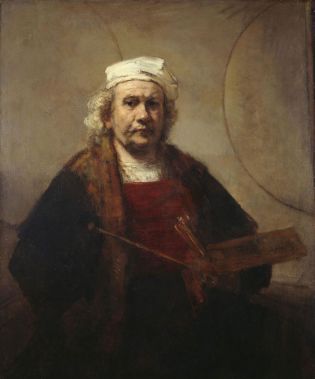
rembrandt self portrait

Rembrandt, Self-Portrait with Two Circles, 1665

I revive this blog in a state of deep personal crisis. My life has spiralled calamitously downwards, and I now find myself in the simultaneously frightening and exciting position of trying to soften the crash and build once again. I am, to use the familiar phrase, figuring out how I will get back on my feet again.

Up to a point, I want to write about this, possibly because it has therapeutic value for me, possibly because I think it may be of benefit to others, possibly because it is intrinsically interesting. There is not a clear idea in my mind why I want to document it, but then much writing comes from a place of unclear intentions. Writing, like reading, is a process of discovery.

My crisis is not, however, all I want to write about; indeed, I hope to keep it to a minimum. There are subjects and topics far more interesting than myself, even to me. I often reflect that it is unlikely to be coincidental that I am experiencing a personal crisis at the same time as we are all living through profound climate, political, social and cultural crises. And I am not so self-absorbed as to imagine that my own crisis comes remotely close in importance and urgency to these global crises; rather, I regard them as vastly more deserving of my time and attention. So, I wish to write about them, and about other things that interest me, far more than I wish to write about myself.

Nevertheless, we have to begin from somewhere. We live in an age in which the personal and the individual are valued, and hence are valid starting points for inquiries into life and the world around us. The key is to see them as places of departure from which we travel well beyond ourselves, rather than to be content never to escape the boundaries of our private concerns.

The best writing about the self—and, in so far as I will write about myself, the writing that inspires me the most—has always taken the individual as a point from which much broader, more universal thought may develop. I think of Montaigne’s Essays, the Confessions of Augustine and Rousseau, Proust’s In Search of Lost Time. Or, to take another creative genre, I think of Rembrandt’s magnificent series of self-portraits, works not of self-indulgence but of exploration of what it is to be human, to be alive and to face mortality.

If I could achieve even a fraction of the humanity and artistry of a writer such as Montaigne or an artist such as Rembrandt, then I would regard my life as making, in some small way, a positive contribution to the world.

Thinking, reading, writing, and the need for solitude

In 1913 Franz Kafka wrote the following to his fiancée, Felice Bower:

You said once that you would like to sit beside me while I write. Listen, in that case I could not write at all. For writing means revealing oneself to excess, that utmost of self-revelation and surrender… that is why one can never be alone enough when one writes, why there can never be enough silence around one when one writes, why even night is not night enough.*

Sara Maitland, in The Book of Silence, considers Kafka’s letter in the context of two different forms of, or reasons for seeking, solitude and silence: in her words, ‘the silence of the hermits and the silence of creative artists’. I instinctively think this distinction—although not one that entails an opposition or mutual incompatibility between its two sides—is correct.

When I reflect upon my own need for solitude I can understand how driven it is by the awareness that only in solitude can I feel fully and creatively alive. I do not have a strong need for a contemplative or spiritual solitude, the solitary life associated, for example, with the monk or the hermit. Certainly I find that being alone can be conducive to contemplation of ‘higher’ or ‘deeper’ things, such as beauty, or the divine, or the idea of transcendence, or the negation of the ego. But, for me, these are incidental to the real purpose of solitude (and, anyway, I am neither religious nor ‘spiritual’ in any meaningful sense).

The purpose is intellectual and creative. Without doubt I have learnt much in my life socially, through discussion and the sharing of ideas and knowledge, in the social settings of the classroom or the living room or the pub. Ultimately, however, truly deep learning only happens later, when, alone, I can reflect on what I have heard and said. And it is in that time of solitary learning that I need total concentration and immersion in thought. To be in company makes this impossible. It matters little if the company is quiet and undisturbing. For the simple possibility of disturbance, the mere presence of others, proves too much.

Just as I am unable to think truly and deeply in company, so too reading—the full engagement and mental interaction with a text—proves impossible. Even the library is not a place I find suitable to such deep reading (a problem that may explain the difficulties of my career as an academic researcher).

Similarly, like Kafka, I find that writing requires being fully alone. It demands a concentration of thought, and what Kafka termed a ‘revealing of oneself’, that are beyond reach in company. The social is an obstacle to true creativity. Writing as both a means to explore the world and a way of exploring and ‘revealing’ the self necessitates going deeply into one’s self—it requires solitude, at the very least a ‘room of one’s own’.

Since thinking, reading and writing are so central to my sense of self, I crave an abundance of solitude. It is only through solitude that I believe I can realize who I am. Of course, I’m conscious that there are other ways of understanding the ‘self’, and these doubtless apply to me too: that we are, in important and unavoidable ways, social beings, and that our ‘self’, or who we are, can never entirely be self-determined but results instead from a complex interaction between how we perceive ourselves and how others perceive us. And I’m aware that for many people self-realization is intrinsically, perhaps even exclusively, social. I do not claim that they are wrong to think so; I offer only a personal view on my own sense of self, and my consequent need for solitude.

Kafka never married.


*Kafka, Letter to Felice Bower, 14-15 February 1913, Letters to Felice, trans. James Stern (1973), as cited by Sara Maitland, The Book of Silence (London: Granta, 2008), pp. 190-1.